2026 Digital Underground Mining Report.
As featured in the 2026 Digital Underground Mining Report. In association with Mining Magazine, Australia's Mining Monthly and Mining Journal.
The underground mining sector is moving decisively into a new era. Digital systems, automation and AI are no longer in the pilot phase; they are becoming part of core operations. The trajectory of these developments are clear. What is far less clear is how to make all of it work together.
As Mining Magazine's 2026 Digital Underground Mining Report sets out, the real challenge over the next decade is not adoption. It is integration: connecting numerous vendors and systems into a single operational picture and closing the gap between what digitisation promises and what an operation can execute. It is a theme we see play out on real mine sites every week, and it is the gap idoba.sim was built to close.
Why The Mine Planning Gap Exists?
Rate-based planning tools calculate an expected outcome from fixed averages. They assume trucks run to schedule, queue at fixed locations, and that congestion does not exist. Every shift underground tells a different story. A ground support delay at one heading. An equipment breakdown that reshuffles the sequence. Conditions underground change constantly, and when they do, the consequences ripple through equipment interactions, infrastructure access and activity sequencing in ways that static planning tools struggle to see.
idoba.sim lets the planning team run and re-run schedules against the mine network and fleet before it leaves the office. With no specialist simulation experience, planners can test whether a new heading sequence still delivers the weekly target. Confirm a revised fleet allocation across the remaining shifts. The output is a schedule the team can commit to with confidence underground.
How Version 2.0 Closes the Planning Versus Execution Gap.
idoba.sim uses agent-based modelling. Instead of reducing the operation to statistical averages, it simulates each asset as an independent agent with its own logic and constraints. Running a scenario of outcomes across 25 statistically varied runs produces a distribution of real simulated outcomes (P10, P50 and P90) that shows the risk profile of the schedule rather than a single expected number.
Version 2.0, released on 1 July 2026, adds development advance and truck load-and-haul into the same platform, and can run from a single 12-hour shift through to a full week 14-shifts.
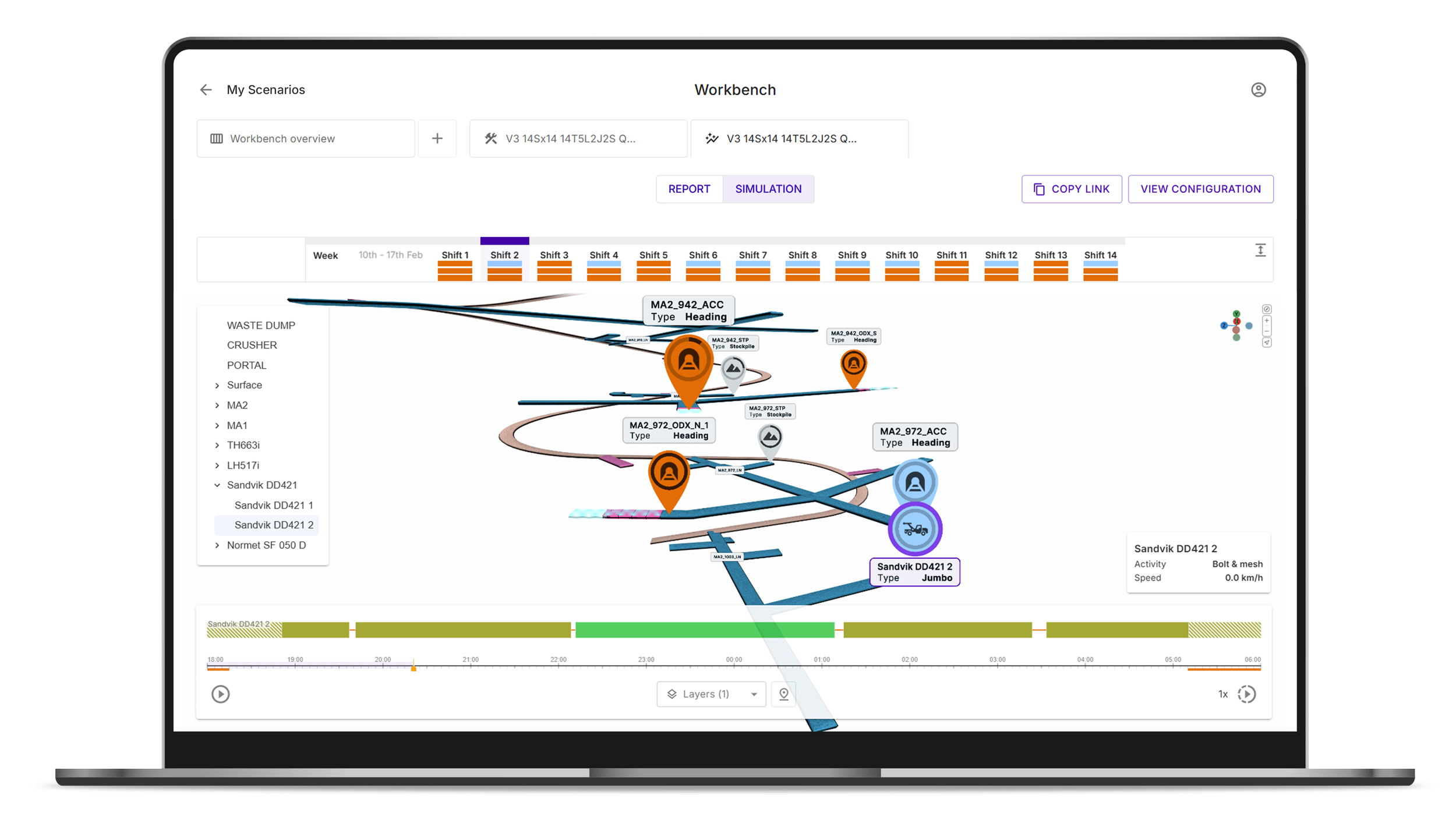
For the first time, planners can see where development and production will compete for the same headings, declines and equipment, and pinpoint congestion and bottlenecks before the schedule leaves the office.

New Features in Version 2.0.
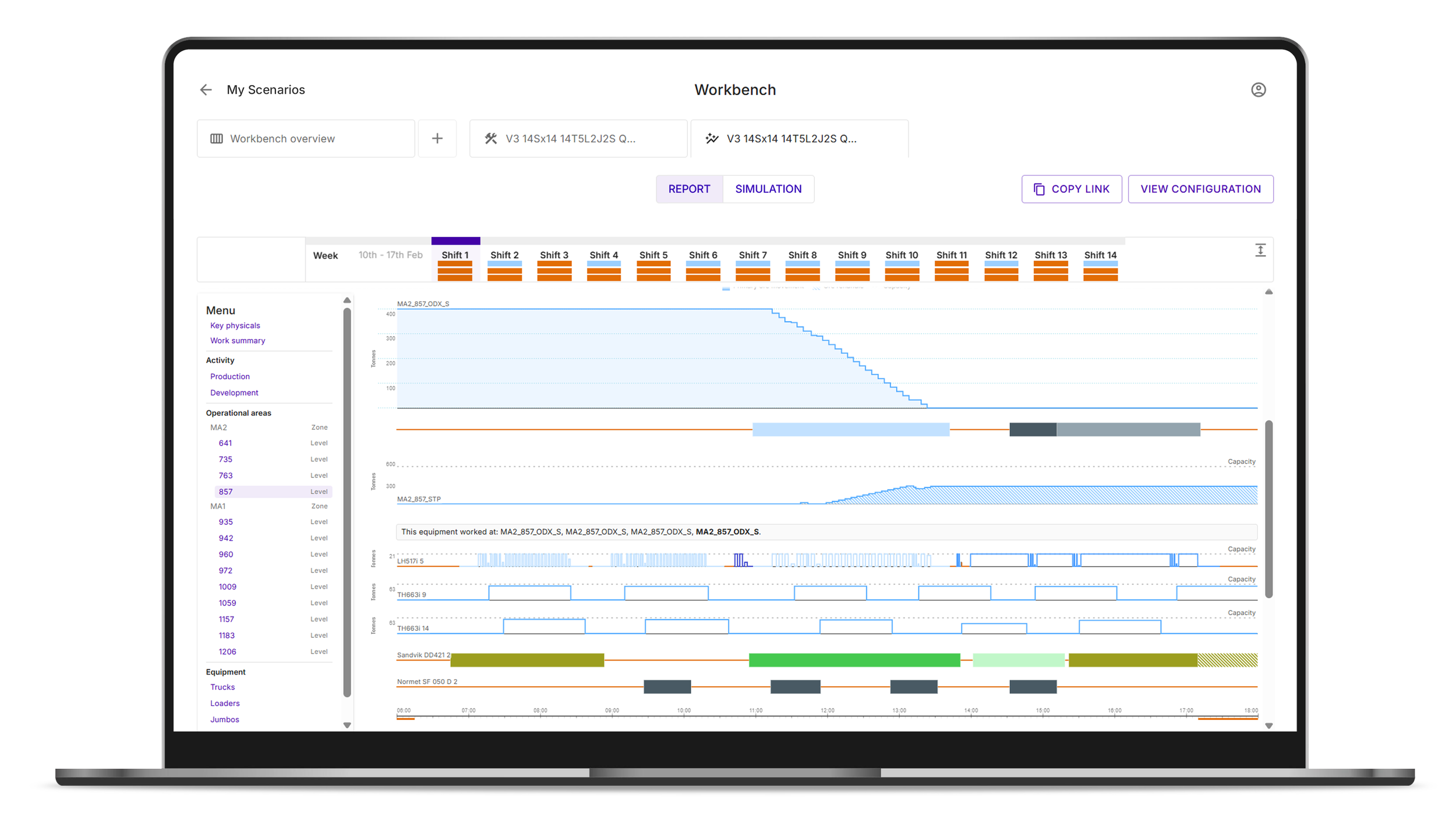
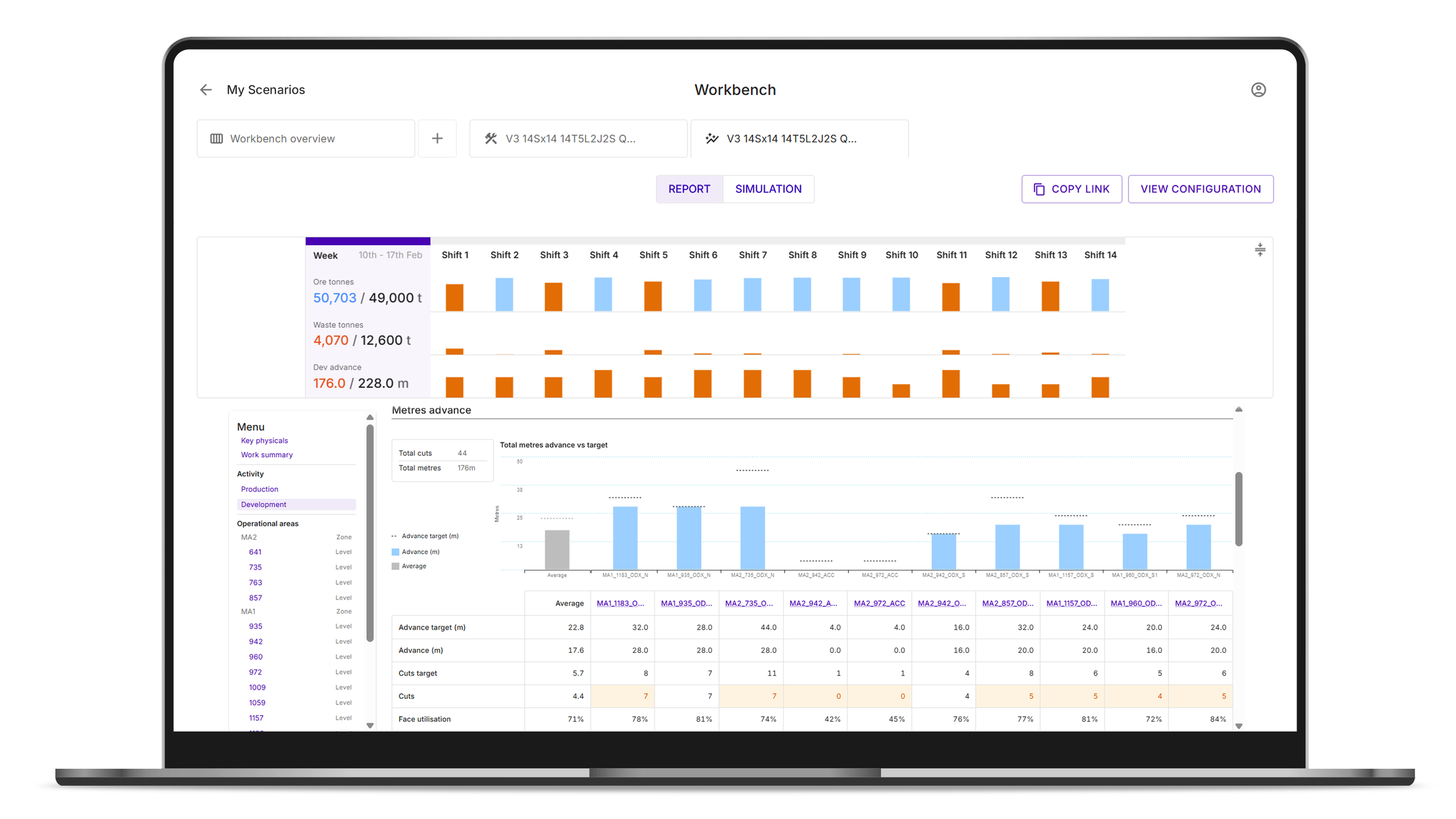
Development Advance Simulation. Drill, blast, bog and support cycle modelling at the individual heading level, with multi-heading sequencing under shared equipment and ground support constraints. Jumbo and loader utilisation reporting by heading and shift, and advance rate distributions (P10/P50/P90) by front.
Weekly Scheduling (14 shifts). Stress-test a full 14-shift schedule covering two shifts per day across seven days. See where congestion, queuing and sequence clashes are most likely to surface in simulation, not underground.
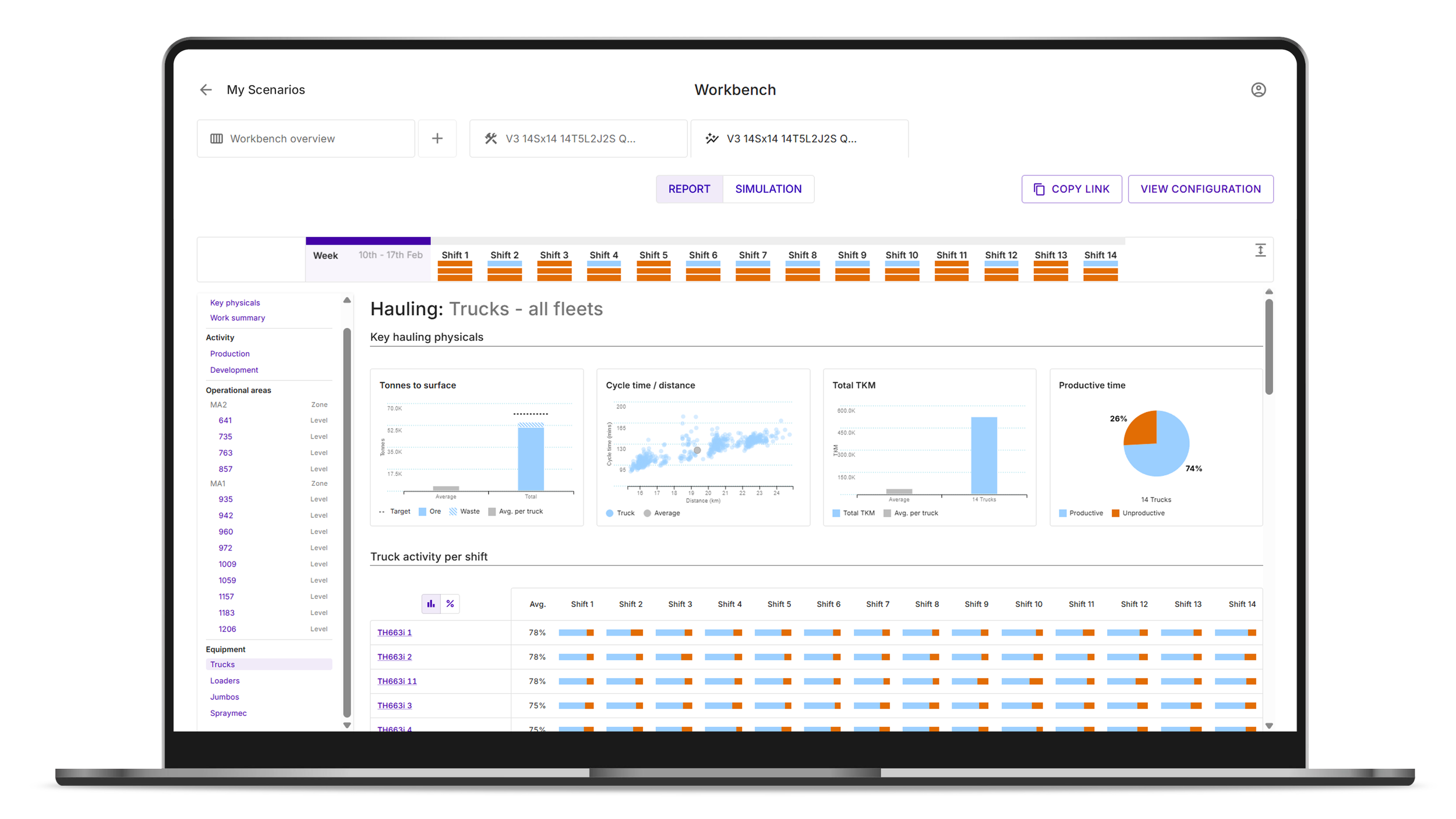
Integrated Load-and-haul and Development. Model the interaction between haulage and development activities competing for the same decline and the same equipment in a single simulation run, including ore and waste from both production and development.
3D visualisation and insight layer. Animated 3D playback alongside summary dashboards covering truck and loader cycle times, utilisation, tonne-kilometres hauled, and downtime accounting across loaders, trucks, jumbos and spraymecs.
The commercial payoff is real. In one simulation study featured in the report, a planning team used idoba.sim to test intermediate stockpile placement and fleet sizing resulting in a 12% increase in ore moved to surface, along with a 39% increase in loader utilisation.
Hear it From the Team.
David Beaumont, Head of Mining Solutions, and Stephen Simpson, Product Manager for idoba.sim, talk through how simulation complements existing planning tools, and what Version 2.0 unlocks for planning teams.
idoba is a proud research partner in the 2026 Digital Underground Mining Report.
Download the the full report from the Mining Magazine website.
See idoba.sim In Action.
Discover more about idoba.sim and book a discovery call. We will walk through your mine network, your fleet, and show you how simulation can build more confidence in your schedule before you commit to it.