

BUILT FOR UNDERGROUND MINING
Underground Mining Simulation. For Operational Teams.
idoba.sim is operational simulation software for underground hard rock mining. Agent-based modelling replicates how equipment and activities interact underground — giving mine planners, engineers, and operations managers a distribution of outcomes before crews are committed.
Mining Companies We’ve Worked With.
LOGO
Logo
LOGO
An Agent-based Simulation Tool. The Team Has
a Reason to Use Everyday.
HOW IT WORKS.
From Mine Data to Planning Confidence. In Hours, Not Days.
idoba.sim is built for operational mining teams, not simulation specialists. No expert hire. No complex setup. Your mine planner or engineer runs the simulation — results feed directly into shift planning and capital decisions.
Here’s How it Works.
-
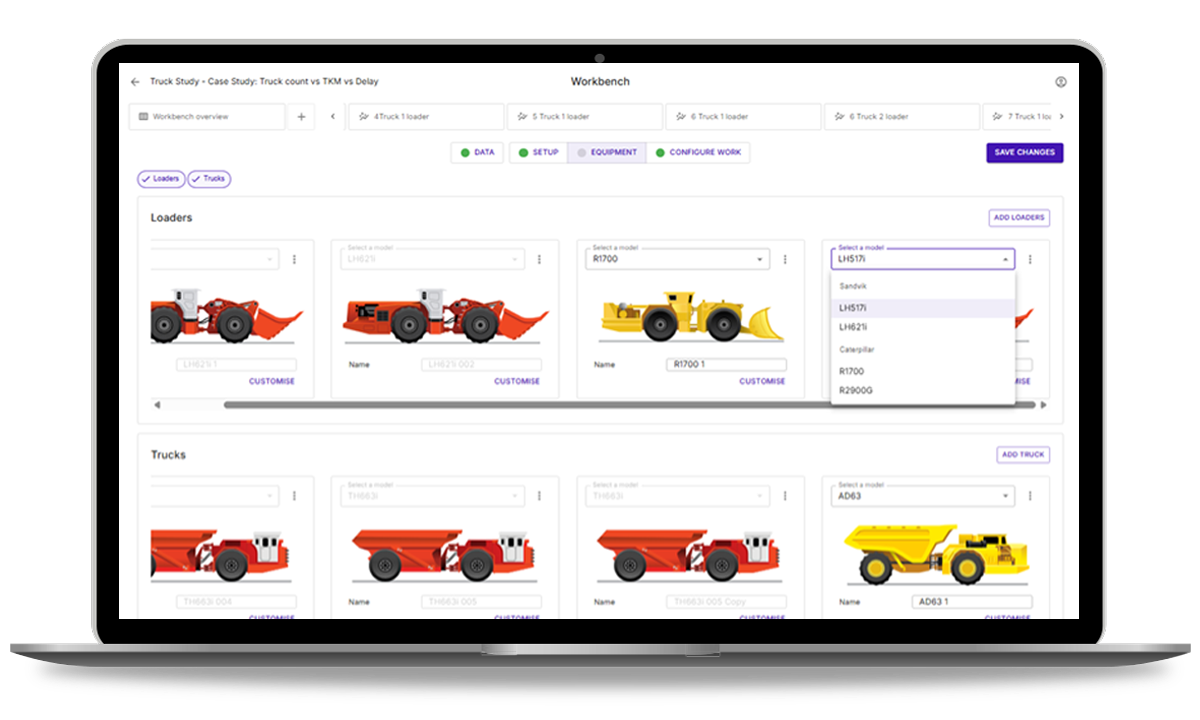
Build Your Scenarios.
Create the scenarios you want to test — different fleet sizes, stockpile positions, heading sequences, task allocations. Compare up to four scenarios side by side in a single session.
-

Run 25 Simulations.
idoba.sim runs 25 statistically varied simulations per scenario. Each run replicates the stochastic nature of real underground operations — variability in cycle times, equipment availability, and task sequencing.
-

Get Your Distribution.
Results are presented as a P10/P50/P90 distribution for each scenario. See ore tonnes moved, loader utilisation, truck cycle times, and bottleneck locations — specific to your plan, your equipment, your site.
THE UNDERGROUND MINING PROBLEM.
Mine Planning Runs on
Assumptions. Most of them
are Wrong.
Rate-based planning tools calculate an expected outcome from fixed averages. They assume your trucks run to schedule, your loaders never queue, and congestion doesn't exist. On every shift underground, reality tells a different story.
USE CASES
How Underground Mining Teams
Put idoba.sim to Work.
LOAD AND HAUL OPTIMISATION
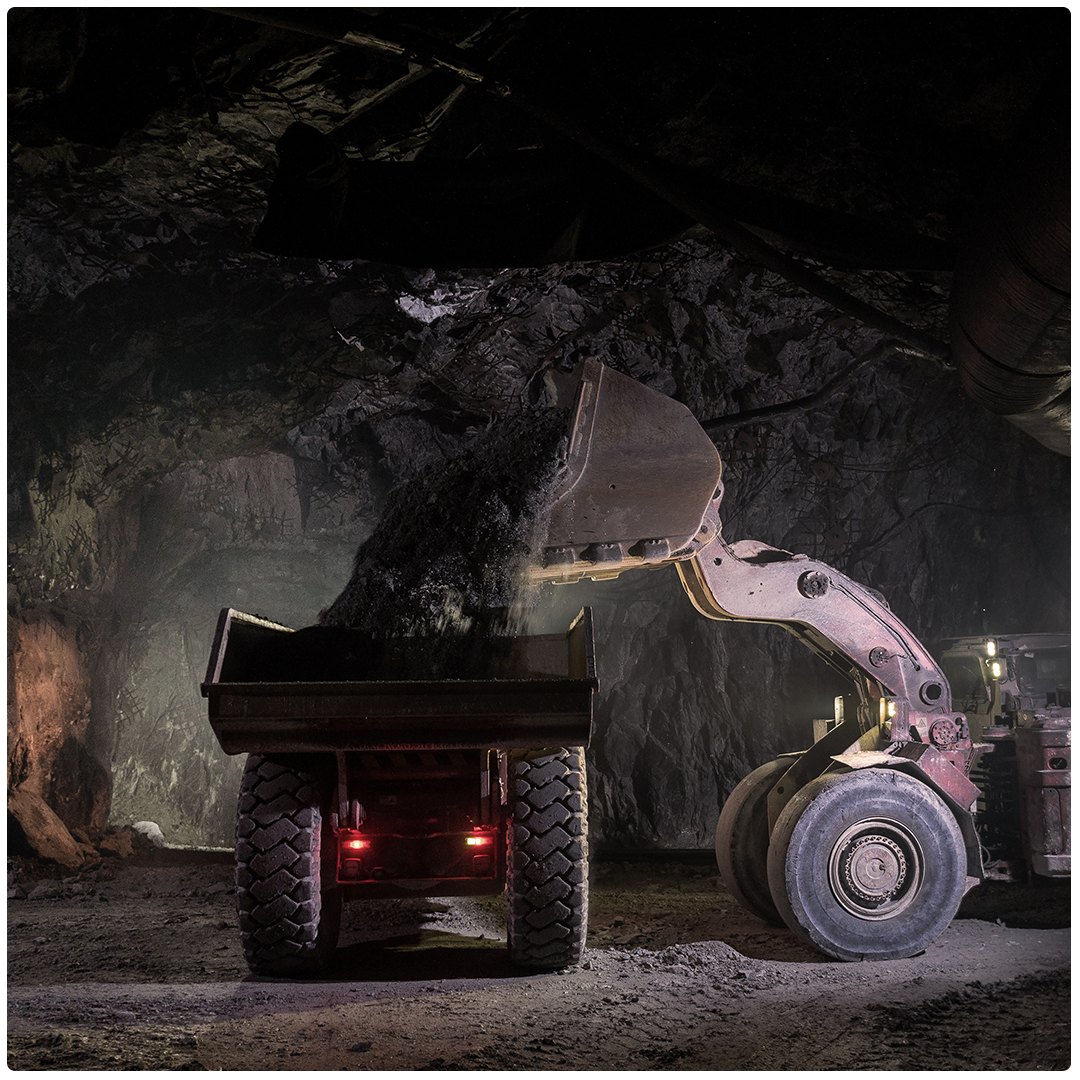
Underground haulage cycles are riddled with inefficiencies that compound across every shift. Trucks wait at loaders. Loaders sit idle at stockpiles. Fleet sizing is guesswork. Teams leave tonnes on the table every single day.
idoba.sim reveals where the congestion is, where loaders are bottlenecked, and what the optimal fleet configuration looks like — before a single tonne is moved underground.
Test fleet size and truck-to-loader ratios without committing capital
Identify queue formation and idle time before shift handover
Answer the equipment investment question with data, not a thumb-suck
Optimise Your Haulage Network Before the Shift Starts.
DEVELOPMENT ADVANCE
idoba.sim gives your planning team the evidence to answer that question. A P10/P50/P90 outcome distribution modelled against your actual mine geometry.
Visual data showing where fleet interactions drive the gap between the plan and what delivers underground. Scenario comparisons your team can present without a simulation expert in the room.
Confidently Defend Recommendations When the GM Asks.
STRESS-TEST WEEKLY SCHEDULE
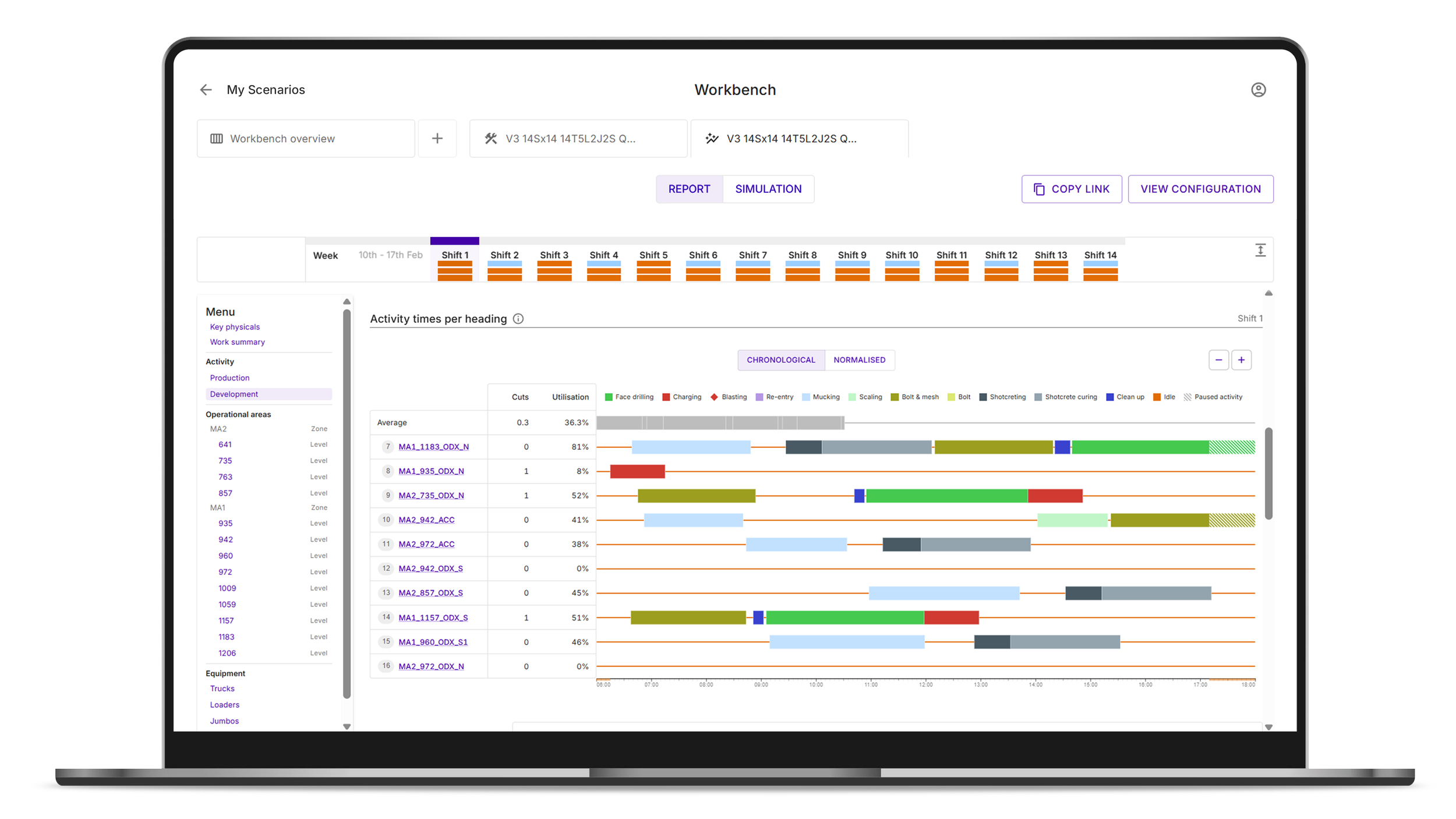
Every day, your planning team builds a schedule based on what should happen. They assign fleet to headings, sequence development against production, and model the week on averages. What they cannot see is how individual trucks queue when the decline is congested, or what happens to shift targets when two loaders compete for the same access route at changeover.
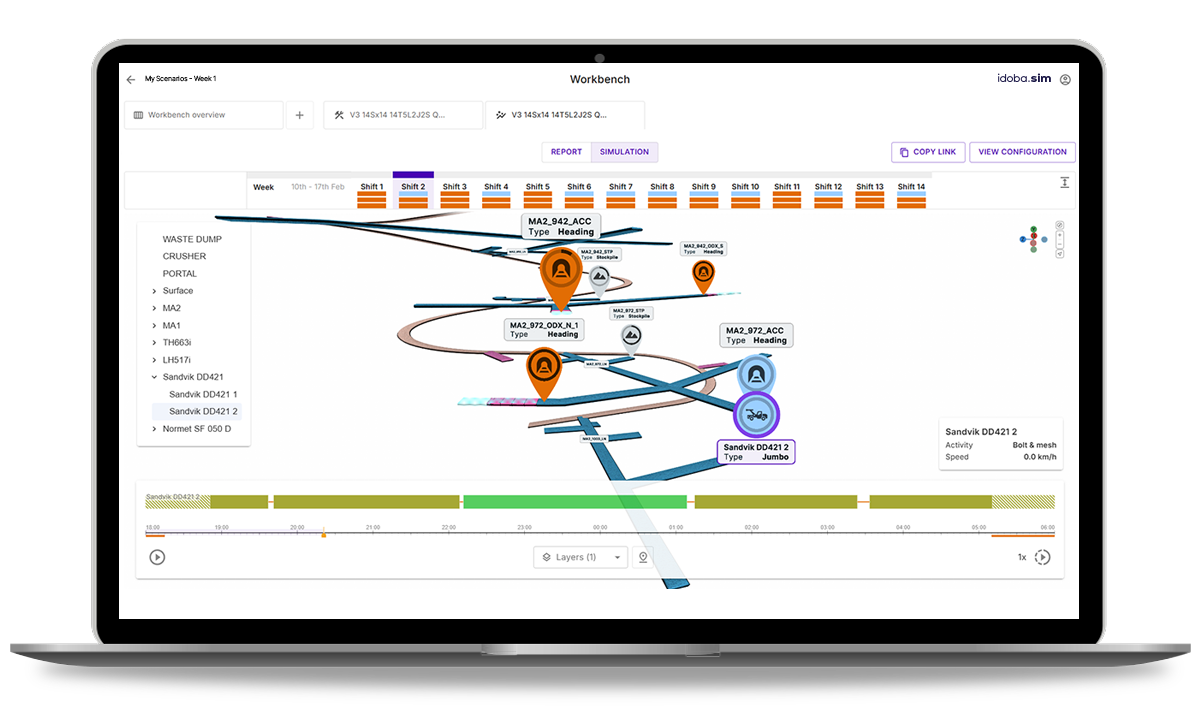
idoba.sim builds a 3D model of your underground mine network, running every truck, loader, and jumbo as an independent agent following its own defined logic. Like queuing when the decline is congested, waiting when a face is not ready, competing for the same access routes your crews navigate every shift.
Identify congestion hotspots before they cost you ore. Surface the inefficiencies that traditional planning tools built on averages routinely miss.
See Where Throughput is Lost Before the Shift Starts.
SIMULATION STUDIES
Delivering Real Results. For Underground Mines.
-
![]()
12% More Ore Throughput By Adding a Dedicated Stockpile Underground.
idoba.sim showed how stockpile placement affects load-and-haul interactions, shift changeover efficiency, and overall ore delivery, giving the planning team the evidence to make the capital case before committing.
-
![]()
Increased Loader Utilisation 39% With Agent-based Simulation.
idoba.sim’s agent-based modelling uncovered the optimal fleet size, congestion hotspots, and bottlenecks for an Australian gold producer. Unclocking productivity gains such as increased loader utilisation and reduced idle time.
The Plan was Defensible. Until the Second
Shift Started.
idoba.sim closes the gap between what your weekly schedule promises and what actually executes underground, running every truck, loader, and jumbo as an independent agent before crews are committed.
idoba.sim gives your planning team the evidence to answer that question. A P10/P50/P90 outcome distribution modelled against your actual mine geometry.
Visual data showing where fleet interactions drive the gap between the plan and what delivers underground. Scenario comparisons your team can present without a simulation expert in the room.
Confidently Defend Recommendations When the GM Asks.
idoba.sim gives your planning team the evidence to answer that question. A P10/P50/P90 outcome distribution modelled against your actual mine geometry.
Visual data showing where fleet interactions drive the gap between the plan and what delivers underground. Scenario comparisons your team can present without a simulation expert in the room.
See Where Throughput is Lost Before the Shift Starts.

Re-plan. Recover Fast.
Hit Your Targets.
A ground support delay at one heading. An equipment breakdown that reshuffles the sequence. Conditions underground change constantly, and when they do, the consequences ripple through equipment interactions, infrastructure access, and activity timing in ways a revised spreadsheet cannot track.
idoba.sim lets the planning team re-run the revised schedule against the actual mine geometry before it is committed. Test whether the new heading sequence still delivers the weekly target. Confirm the revised fleet allocation holds across all 14 shifts. Lock in a plan you can defend before crews go underground.
What is Agent-based Modelling and Why Does it Produce Better Planning Outcomes?
Conventional planning tools model averages. They take a set of assumptions like truck speed, cycle time, loader availability and apply them to a spreadsheet. The output is a number that represents what happens if those averages hold.
Underground operations do not run on averages. They run on interactions between individual trucks competing for decline access, between loaders waiting on a face that is not ready, between shift change effects that ripple through the whole sequence.
In idoba.sim, every piece of equipment is an independent agent with its own logic, constraints, and decisions. Trucks queue when the decline is congested. Loaders wait when the face is not ready. Shift change effects ripple through the network the way they do on a real mine site.
The output is a distribution of outcomes, reflecting the real range of what your operation will deliver under a given plan. Not an average. Not a best case. That distribution is the recommendation. It is something a Technical Services Manager can put in front of the General Manager and defend — not because it promises a number, but because it shows the range.
Simulation Software Built for Underground Mining.
idoba.sim is built and backed by Perenti, With 35 years of operational hard rock mining experience across Australian and global operations. The model reflects how underground mines actually behave, because it was built by people who ran them.
Cloud-based. No Installation.
idoba.sim is cloud-based. Your team has access from day one, with no local installation and no IT infrastructure to setup before you can run your first scenario.
Built for Mine Planners.
idoba.sim was built for engineers with no simulation experience. If you can describe your fleet, your haulage network, and your planning problems, you can run a scenario.
Decisions in Hours, not Days.
When your planning team owns the software, the turnaround from question to answer is hours, not weeks waiting on an external engagement.
One Conversation. Built Around Your Operation.
Bring your planning challenge and our team will walk through how idoba.sim models it, against your geometry, your fleet, and your shift sequences.
No generic walkthrough. A technical session that you can take something from.